


Storage or Custodian Confusion
Victims may be unclear where their metals are stored, what fees they are paying, or whether the metals were purchased as represented.
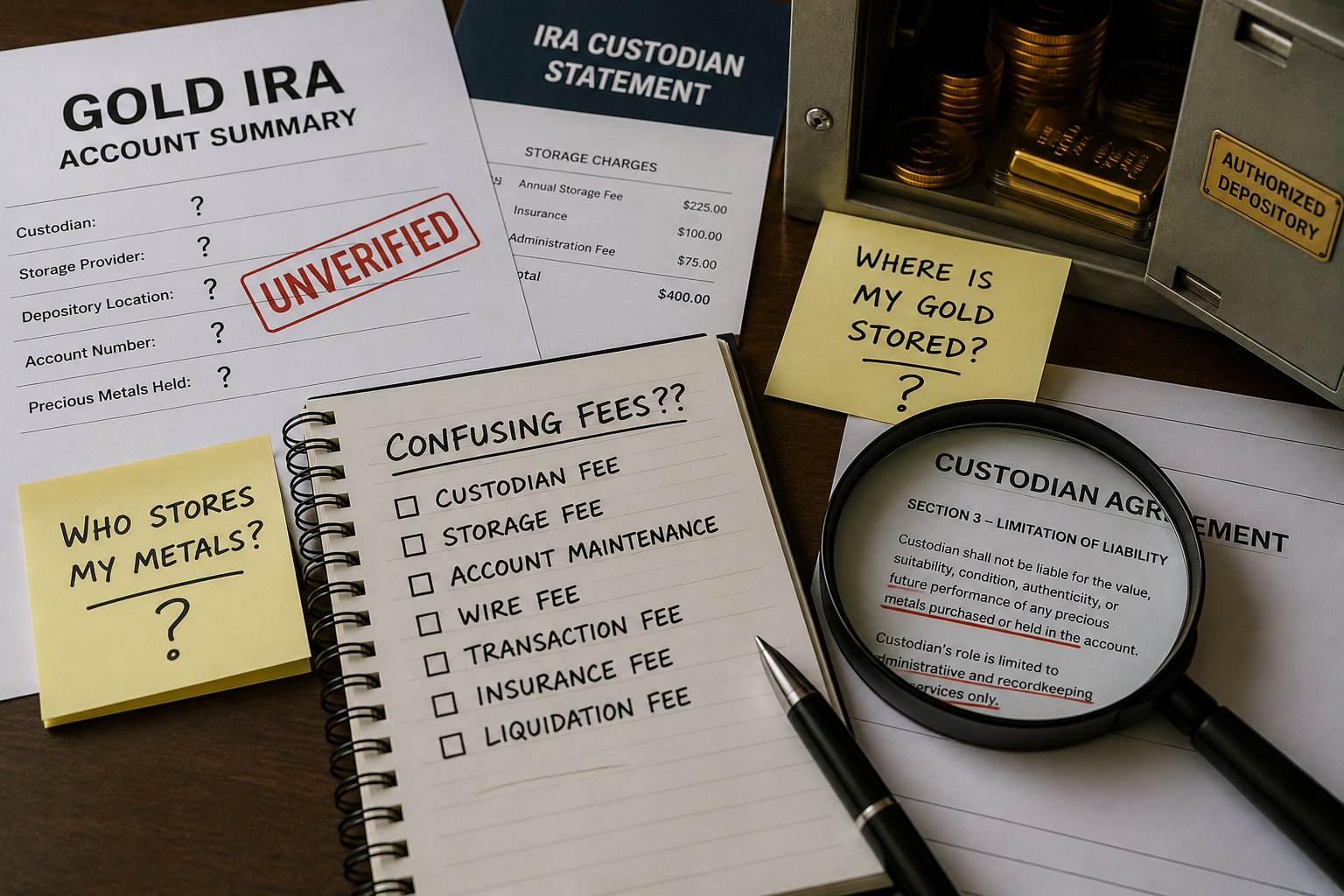
Storage or Custodian Confusion
Storage and custodian confusion is a major red flag in Gold IRA and self-directed precious-metals IRA transactions. Many consumers believe they are simply buying gold or silver for retirement, but the actual process may involve multiple parties: a dealer, salesperson, IRA custodian, depository, storage provider, and sometimes a separate marketing company.
The concern is whether the consumer understood where the metals were stored, who controlled the account, what fees applied, and whether the metals were actually purchased as represented.
1. Unclear Custodian Role
Gold IRAs are often held through a self-directed IRA custodian. Some investors assume the custodian reviewed or approved the investment, but custodians may perform mostly administrative functions.
This can create confusion. A consumer may believe the custodian verified the dealer, checked the metals, confirmed fair pricing, or protected them from fraud. In reality, the custodian may not have evaluated whether the transaction was suitable or fairly priced.
Common warning signs include:
- You thought the custodian was protecting or advising you.
- You were not told the custodian’s role was limited.
- The salesperson used the custodian’s name to create credibility.
- You assumed the custodian approved the dealer or investment.
- You later discovered the custodian did not verify pricing, markups, or suitability.
2. Confusion About Where the Metals Are Stored
Precious metals in a Gold IRA are usually supposed to be held in an approved depository, not personally held by the investor. Problems can arise when consumers are not given clear information about where their metals are located or how to verify ownership.
If the storage arrangement was vague, delayed, or hard to confirm, that may be a warning sign. Consumers should be able to identify the depository, account records, storage fees, and documentation showing what metals are being held.
Common warning signs include:
- You were not told exactly where your metals were stored.
- You never received clear depository statements.
- The storage company was different from what you expected.
- You had trouble confirming the metals were actually purchased.
- You were unsure whether the metals were segregated, allocated, or pooled.
3. Unexpected Storage and Account Fees
Gold IRAs may include annual custodian fees, storage fees, transaction fees, wire fees, shipping fees, insurance fees, and liquidation fees. These costs can reduce account value over time.
The issue is not merely that fees exist. The issue is whether they were clearly explained before the rollover or purchase. Some consumers only discover the full cost structure after the account is already open.
Common warning signs include:
- You were surprised by annual custodian or storage fees.
- Fees were buried in paperwork but not explained verbally.
- You were charged transaction, wire, or account maintenance fees you did not expect.
- The salesperson focused on “protection” but minimized account costs.
- The fees made it harder for the account to break even.
4. Missing, Incomplete, or Confusing Account Records
A Gold IRA should have clear records showing the amount invested, metals purchased, pricing, storage location, custodian account information, and current account value. Confusing or incomplete records can make it difficult to determine what happened.
Some consumers do not realize there is a problem until they request statements, resale quotes, or liquidation information and discover gaps in the paperwork.
Common warning signs include:
- You do not have clear invoices or purchase confirmations.
- Your custodian statement does not match what the dealer told you.
- The metals listed are different from what you thought you bought.
- You cannot determine the current resale value.
- You were given vague explanations when asking for records.
- You cannot confirm whether all purchased metals are actually in storage.
Why This Matters
Storage and custodian confusion can make it difficult to know who is responsible when a Gold IRA goes wrong. The dealer may blame the custodian. The custodian may say it only handled paperwork. The depository may only confirm what was delivered. Meanwhile, the investor may be left with unclear records, unexpected fees, and an account worth less than expected.
If your Gold IRA involved unclear custodian responsibilities, confusing storage arrangements, missing records, unexpected fees, or difficulty verifying your metals, your situation may qualify for a free review.