


Rare or Collectible Coin Traps
Some consumers are steered into numismatic, semi-numismatic, or collectible coins with large spreads and questionable resale value.
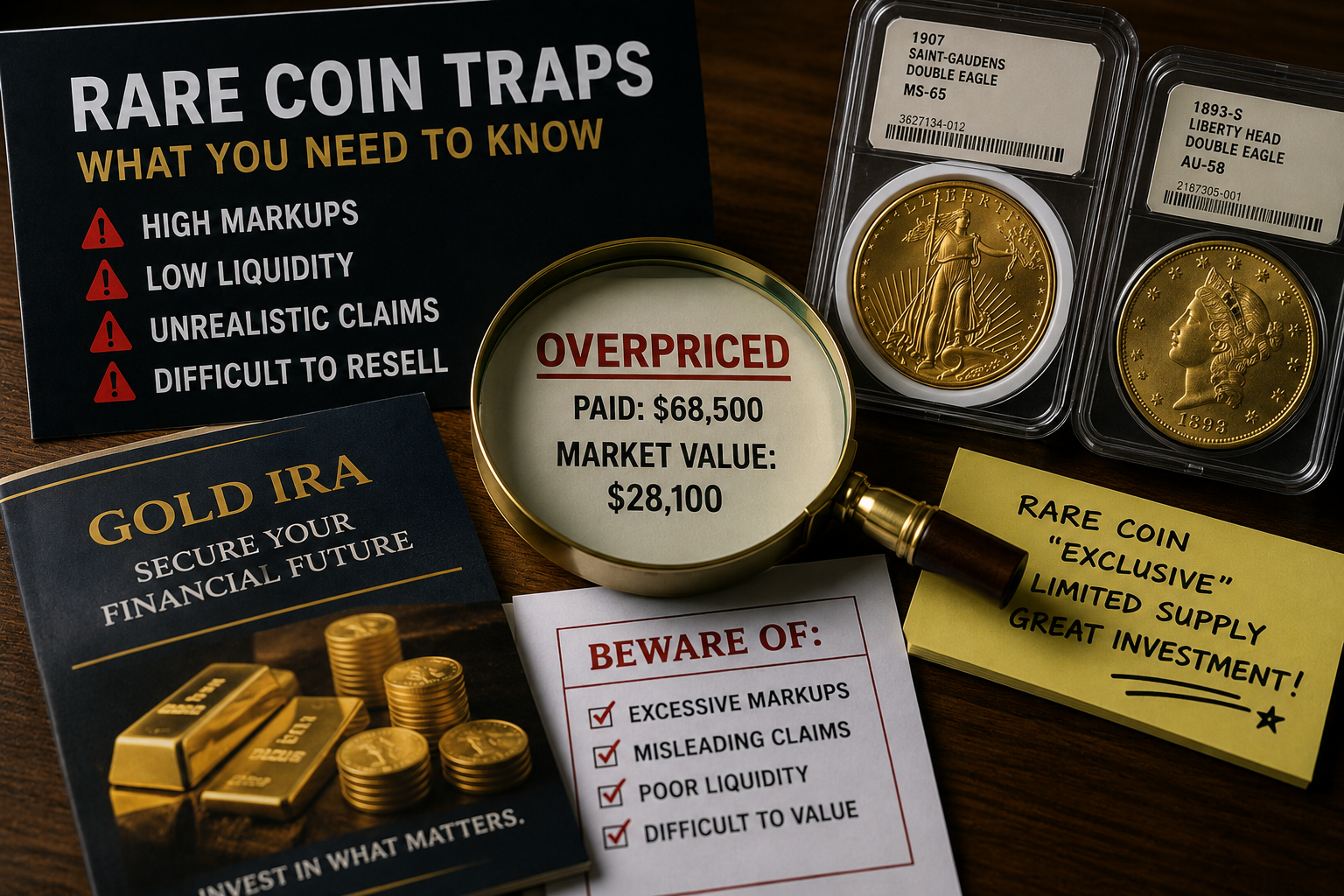
Rare or Collectible Coin Traps
Rare, collectible, semi-numismatic, and “premium” coins are one of the most common problem areas in Gold IRA and precious-metals sales. Some investors believe they are buying stable gold or silver for retirement, but later discover they were sold coins with large markups, limited resale demand, and unclear pricing.
The issue is not always whether the coins are real. The issue is whether they were suitable for retirement savings, fairly priced, and clearly explained.
1. “Premium” Coins Sold Instead of Standard Bullion
Some consumers intend to buy gold or silver as a retirement hedge but are instead steered into premium coins, proof coins, rare coins, or semi-numismatic coins.
These products may carry much higher markups than standard bullion bars or widely traded coins. The salesperson may present them as more valuable, more protected, or more exclusive, but the investor may not understand how much extra they are paying.
Common warning signs include:
- You asked about gold or silver, but were sold “premium” or “rare” coins.
- The dealer emphasized exclusivity, scarcity, or collector value.
- You were not shown a clear comparison to standard bullion pricing.
- You were told the coins were better for retirement, but the explanation was vague.
- The coins were difficult to value after purchase.
2. Large Markups Hidden Behind Collector Value
Rare or collectible coins can be harder to price than standard bullion. This can make it easier for a dealer to charge a large markup without the investor realizing it.
Unlike standard gold or silver bullion, which can be compared to spot price, collectible coins may be priced based on condition, rarity, grading, demand, and dealer opinion. If those factors were used to justify an inflated price, the investor may have paid far more than the coins could realistically be resold for.
Common warning signs include:
- The invoice does not clearly explain the markup.
- The dealer did not disclose the melt value or bullion value.
- You were told the coins had special appreciation potential.
- A later appraisal or buyback offer was far below the purchase price.
- The dealer avoided giving a clear resale value.
3. Misleading Claims About Protection or Confiscation
Some sales pitches claim that rare or collectible coins offer special protection from government seizure, reporting rules, market crashes, or financial instability.
These claims can be misleading if they are used to scare the investor into buying high-markup coins instead of lower-cost bullion. Many consumers later realize the “protection” argument was part of the sales pitch rather than a clear financial benefit.
Common warning signs include:
- You were told rare coins were safer than bullion.
- The salesperson mentioned government confiscation or seizure.
- You were told collectible coins had special privacy or protection benefits.
- You were pushed away from standard bullion without a clear reason.
- The pitch relied more on fear than transparent pricing.
4. Poor Liquidity and Resale Problems
A major risk with rare or collectible coins is that they may be difficult to sell for anything close to the original purchase price.
The investor may be told the coins are valuable, but when they try to sell, they may receive a much lower offer. This can happen because the original purchase price included dealer markup, sales commission, or subjective collector premiums that the resale market does not support.
Common warning signs include:
- The dealer’s buyback offer was much lower than what you paid.
- Other dealers offered significantly less for the same coins.
- You could not find reliable market pricing.
- The coins had to be appraised before anyone would quote a price.
- You were surprised by how hard they were to liquidate.
Why This Matters
Rare or collectible coin traps can create immediate retirement losses. An investor may believe they bought a conservative precious-metals asset, but the actual purchase may include high markups, weak liquidity, confusing valuations, and resale losses.
If you were sold rare, collectible, proof, semi-numismatic, or premium coins through a Gold IRA or precious-metals retirement account, and later discovered the coins were worth far less than expected, your situation may qualify for a free review.