


Advisor-Driven Rollovers
A financial advisor, broker, or salesperson may have encouraged liquidation of retirement assets into an unsuitable metals-heavy position.
Advisor-Driven Rollovers
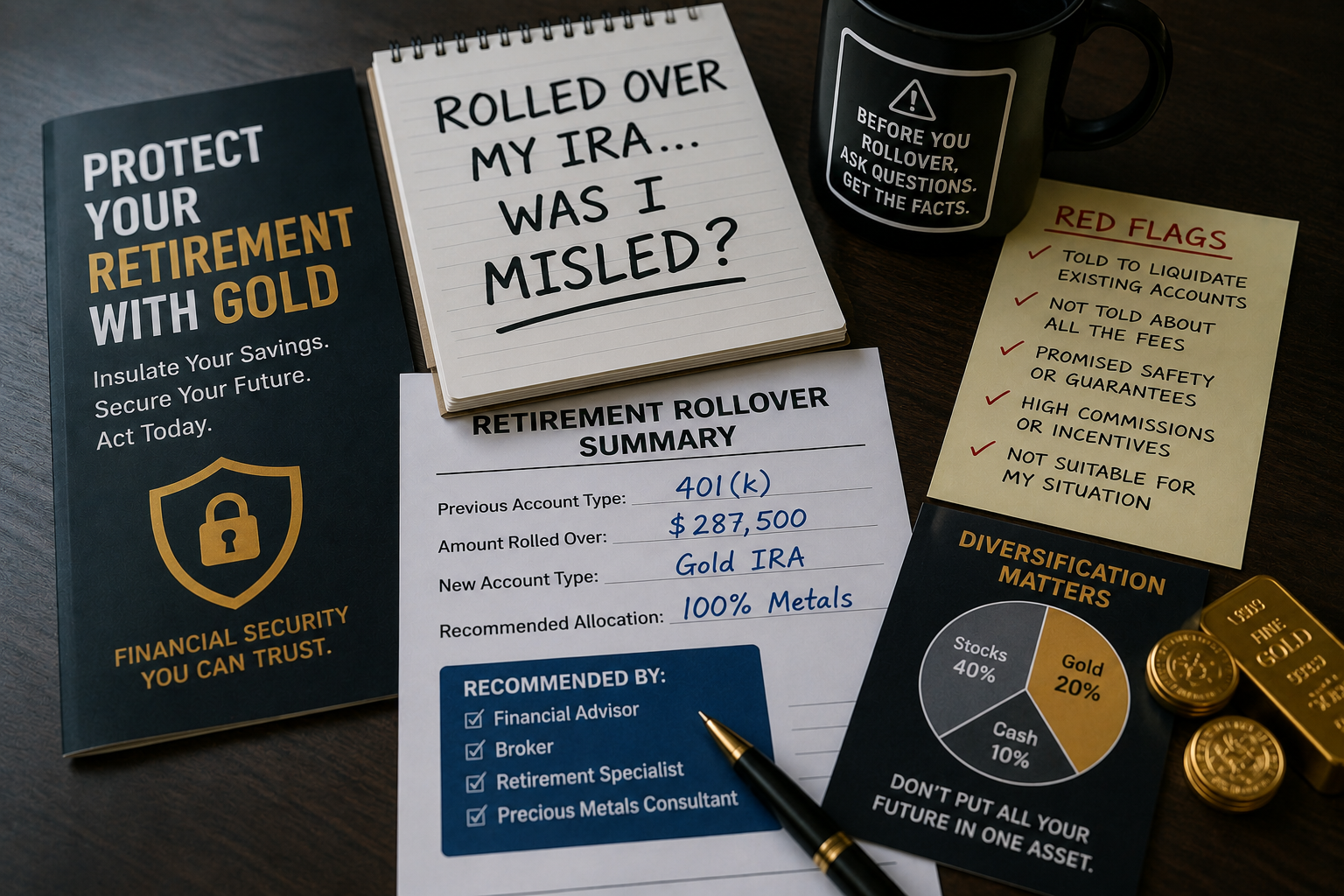
Advisor-driven rollovers are a major red flag when a financial advisor, broker, insurance agent, retirement specialist, or salesperson encouraged someone to liquidate traditional retirement assets and move heavily into gold, silver, rare coins, or a self-directed precious-metals IRA.
The issue is not simply that an advisor discussed precious metals. The concern is whether the recommendation was suitable, properly explained, and in the investor’s best interest — especially if the client was retired, near retirement, or relying on those savings for long-term security.
1. Liquidating Retirement Assets Into Precious Metals
Some consumers are encouraged to sell stocks, bonds, mutual funds, annuities, TSP funds, 401(k) holdings, or IRA assets to fund a Gold IRA or precious-metals purchase.
This can create major risk if the investor moved from a diversified retirement portfolio into a concentrated metals position. Gold and silver can fluctuate in value, and rare or premium coins may carry high markups and poor resale liquidity.
Common warning signs include:
- You were told to move money out of an IRA, 401(k), TSP, pension, or brokerage account.
- A large portion of your retirement savings was moved into metals.
- You were not given a clear explanation of concentration risk.
- You were told traditional investments were unsafe while gold was presented as safer.
- The advisor or salesperson did not compare the Gold IRA against other lower-cost options.
2. Unsuitable Recommendations
A recommendation may be unsuitable if it did not match the investor’s age, financial situation, risk tolerance, liquidity needs, retirement timeline, or investment objectives.
For many retirees, liquidity, income, preservation of capital, and diversification are critical. Moving heavily into precious metals may not be appropriate if it exposes the investor to large markups, volatility, storage costs, or difficulty selling.
Common warning signs include:
- You were retired or near retirement when the rollover was recommended.
- You needed stable income or access to funds.
- You had limited investment experience.
- You were encouraged to put too much of your savings into gold or silver.
- Your personal financial needs were not carefully reviewed before the recommendation.
3. Misrepresentation or Incomplete Disclosure
Advisor-driven Gold IRA cases often involve incomplete or misleading explanations about risks, fees, liquidity, and resale value.
The advisor, broker, or salesperson may have emphasized safety, inflation protection, or market-crash protection while downplaying the true costs of the transaction. If the recommendation was based on partial information, the investor may not have been able to make an informed decision.
Common warning signs include:
- You were not clearly told about dealer markups, spreads, or commissions.
- You were not told about storage, custodian, liquidation, or transaction fees.
- You were not given a realistic resale value before buying.
- You were told the investment was safe, protected, or guaranteed.
- You later discovered the metals were worth far less than the amount invested.
4. Conflicts of Interest and Sales Incentives
Some rollovers may be driven by compensation rather than the investor’s needs. A broker, advisor, salesperson, or marketing company may receive commissions, referral fees, dealer incentives, or other compensation tied to the transaction.
If the financial incentive was not disclosed clearly, the investor may not have understood that the recommendation was potentially biased.
Common warning signs include:
- You were not told how the advisor or salesperson was paid.
- The salesperson seemed focused on closing the rollover quickly.
- You were pushed toward a specific dealer or custodian.
- You were discouraged from getting a second opinion.
- The recommendation benefited the seller more than the investor.
Why This Matters
Advisor-driven rollovers can be especially serious because consumers often trust financial professionals to protect their retirement savings. When that trust is used to push a high-cost, unsuitable, or metals-heavy position, the investor may suffer immediate losses, reduced liquidity, and long-term retirement harm.
If a financial advisor, broker, retirement specialist, or salesperson encouraged you to move retirement savings into a Gold IRA, rare coins, bullion, or precious-metals investment — and you later discovered hidden fees, inflated pricing, unexpected losses, or unsuitable risk — your situation may qualify for a free review.